Dinah
Genesis 30:21 Afterwards [Leah] bore a daughter and named her Dinah.
Genesis 34:2 When Shechem son of Hamor the Hivite, prince of the region, saw [Dinah], he seized her and lay with her by force.
Genesis 34:25-27…Simeon and Levi, Dinah’s brothers, took their swords and came against the city unawares and killed all the males. They killed Hamor and his son Shechem with the sword and took Dinah out of Shechem’s house and went away. And the other sons of Jacob came upon the slain and plundered the city because their sister had been defiled.
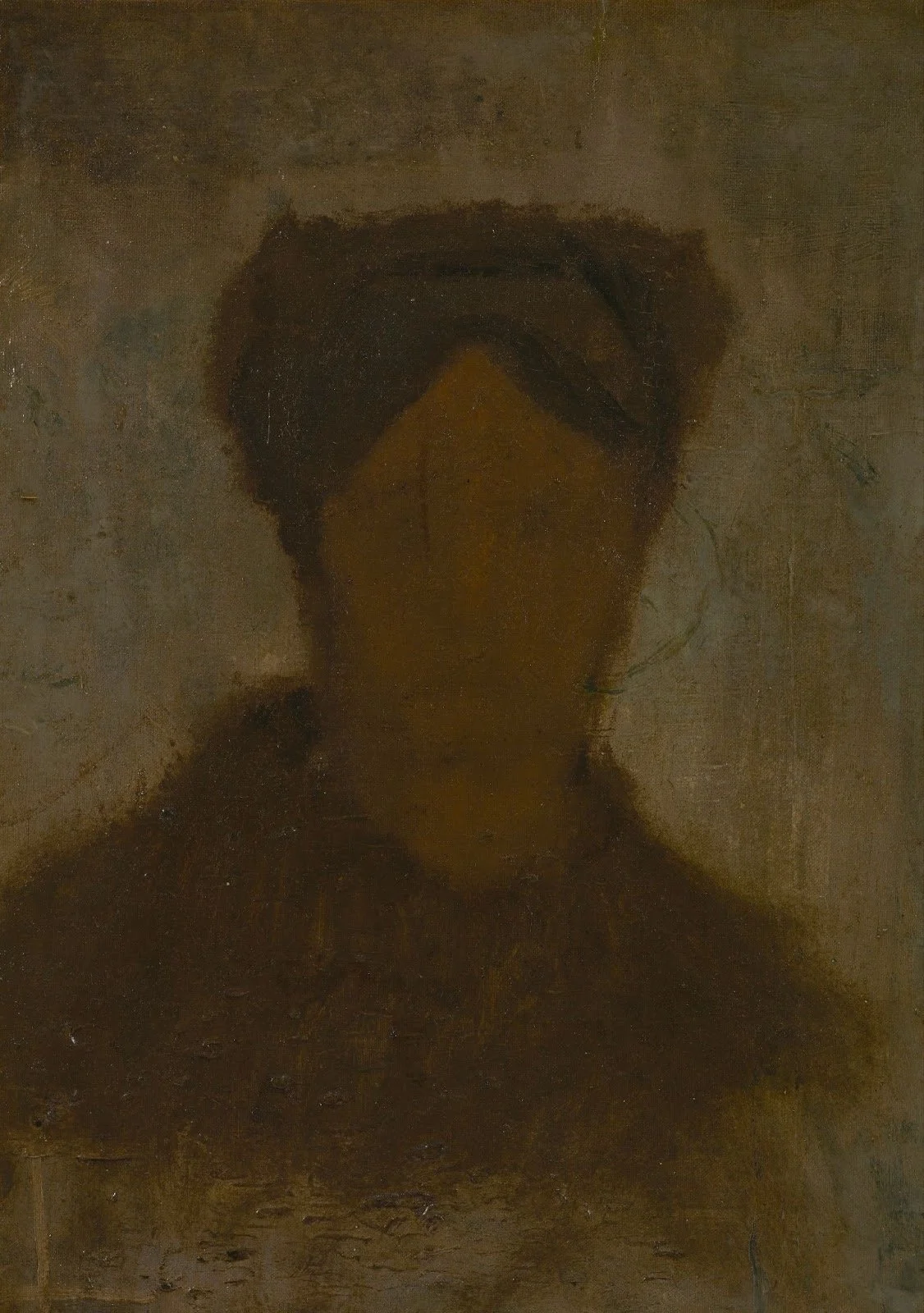
“Head of a Woman” by Vincent van Gogh, 1884. Photo from Wikimedia Commons.
Dinah, the daughter of Leah and Jacob, is only mentioned three times in the Bible. Two of the mentions are brief (her birth announcement in Genesis 30:21 and her inclusion in a genealogical list in Genesis 46:14). However, the entirety of Genesis 34 is, ostensibly, about Dinah. Yet while the narrative is about what happens to and for Dinah, Dinah herself never speaks. Not once. Unlike her mother Leah, her aunt Rachel, her grandmother Rebekah, and her great-grandmother Sarah, Dinah is a silent and passive participant in the biblical story.
So, what happens to Dinah? The only action ascribed to Dinah is in Genesis 34:1, where she goes “to visit the daughters of the region.” She is seen by the prince of the region, Shechem, and he “debases” her. While many interpreters understand what happens to Dinah as rape, the text is not entirely clear. Unlike in the Tamar and Amnon story of 2 Samuel 13, the text never says Dinah cries out. Moreover, Shechem’s action in Genesis 34:2 is described as “wayĕ‘annehā”: “This verb, frequently translated as 'rape,' more precisely means 'debased.’ It does not imply forced sex but has a sense of downward social movement” (1).
In the Ancient Near Eastern context of the story, even if Dinah consents to have sex with Shechem, the fact that she has sex before marriage, with a foreigner, and without the consent of her family, makes her debased. But if she is forced by Shechem, then the Dinah we meet in Scripture is a voiceless victim whose silence obscures the wrong done to her. Regardless of which interpretation is correct, the text itself gives no indication that Dinah is anything other than degraded by her encounter with Shechem.
Dinah’s tragedy does not end there. Shechem’s father, Hamor, goes to Jacob to arrange a marriage between Shechem and Dinah. As part of the terms of the marriage, Jacob’s sons insist that Shechem, Hamor, and the men of the region be circumcised. While the men are still recovering from the procedure, Jacob’s sons attack the city, plundering its wealth. They retrieve Dinah from Shechem’s house and kill Hamor, Shechem, and all the males of the city. When they return, Jacob is dismayed that his sons have made him “odious” to his neighbors. But his sons reply, “Should our sister be treated like a prostitute?” (Genesis 34: 31).
During all of this, Dinah never speaks. Does she want to marry Shechem, her possible rapist? How does she feel about being cited as the cause of a massacre? We do not know, because the Bible does not say. Dinah’s story is ambiguous—all the more so because Dinah herself is silent.
Dinah’s name means “justified.”
Dinah is the protagonist of Anita Diamant’s novel The Red Tent.
The fact that Shechem “loved” Dinah is sometimes cited as evidence that he did not rape her, but “the simple truth is that there are some people who rape the persons they profess to love” (Womanist Midrash by Wilda C. Gafney, p.228).
(1): Alison L. Joseph